Written by Harry Dobbs
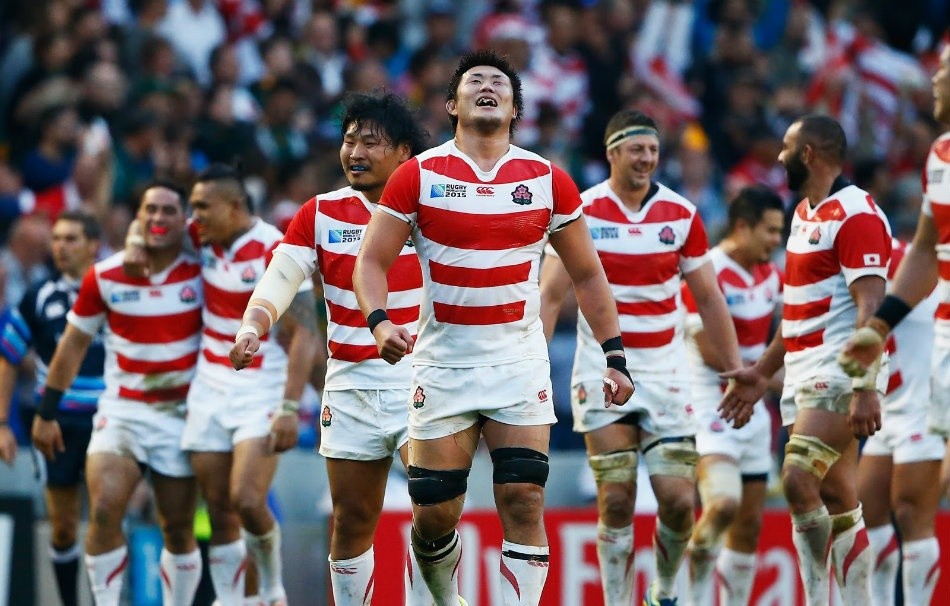
After the historic World Cup wins over Ireland and Scotland, the question must now be asked: Is it time to let Japan sit at the top table of World Rugby?
It has been a whirlwind few weeks for Japanese rugby. Becoming the first ‘Tier 2’ nation to host The Rugby World Cup is an enviable achievement in itself. However, the way in which the Brave Blossoms have successfully navigated Pool A, leaving Ireland, Scotland, Samoa, and Russia in their wake has captivated not only the hearts and minds of the nation, but the rugby world.
Ireland, top of the world rankings coming into the tournament and fresh off the back of a commanding victory over Scotland, simply had no answers to Japan’s intensity across the pitch. The Irish could not blame the short turnaround, their own indiscipline, or even the loss of the talismanic Johnny Sexton for the result. On 28th September they were simply outplayed by a stunning Japanese performance in Shizuoka.
Scotland had recovered somewhat in style, not conceding a point against Russia and Samoa following their 27-3 opening weekend drubbing at the hands of the Irish, and were tipped by many to have the better of the Japanese in the crunch game in Pool A. Scotland, needing to take at least 4 more match points than their Pool A rivals, started the game brightly. But, in similar fashion to the Irish, were blown away by Japan’s scintillating intensity and pinpoint accuracy.
Looking at the final standings in Pool A, a rugby novice would be forgiven for thinking there had been a mistake.

Pool A Final Standings. (World Rugby)
Japan finished top with 19 points out of a maximum of 20, ahead of Ireland who follow them into the Quarter Finals. Many have spoken of the ‘shock’ Pool A results. But was this really such a shock?
Ever since World Rugby announced in 2009 that Japan would host the RWC2019, this nation has been preparing for the most important games in its history.
The 10 Year Process
21st June 2009.
New Zealand have just defeated England 44-29 to win the 2009 IRB Junior World Championship Final in Tokyo.
The Japanese finished bottom of their Pool after defeats to England, Samoa and Scotland, and have just defeated Uruguay to avoid collecting the wooden spoon. They can take little inspiration from the Nation’s senior team, languishing at 16th in the world rankings, only slightly ahead of Romania and Russia. There is work to be done if Japan wish to compete with the world’s best in 10 years time.
The 2011 World Cup in New Zealand gave Japan an insight into how to effectively host a Rugby World Cup, perhaps more of an insight as they would’ve liked, with New Zealand cruising to a 83-7 win when the sides met in the pool stage. The Kiwis went on to lift the Webb Ellis Cup in front of their home fans in Eden Park, Auckland, but on-field problems remained for the Japanese, again finishing bottom of their pool, as they did in 2007.
Between the conclusion of the 2011 World Cup and the beginning of the 2015 edition, marked improvements could be seen in Japanese performances and results. Entering the tournament ranked 13th in the world, Japan delivered one of rugby’s greatest ever shocks, overcoming one of the pre-tournament favourites South Africa by 34-32 courtesy of a try with the clock in red.
In 2015, Japan became the first team ever to win 3 pool games and fail to progress to the Quarter Final stage of the World Cup. The only team to beat them then? Scotland. By a commanding scoreline of 45-10. A quick glance at the 91-3 and 72-18 demolitions just eight years previously at the hands of Australia and and Wales respectively, in comparison with Japan’s performances at the 2015 RWC should serve as an indicator of where this team was, and is, heading.
The graph below displays how Japan’s Rugby World Ranking has improved over the years. Each year is a World Cup year and the ranking is taken from the year-end.
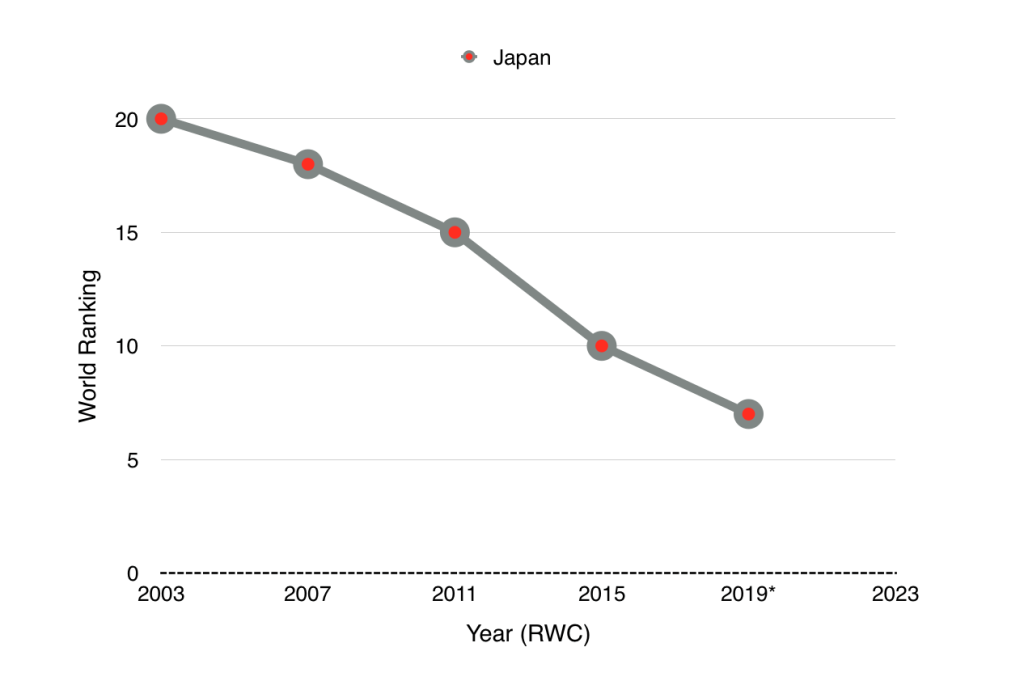
Following Sunday’s triumph over Scotland, Japan have risen to a highest ever ranking of 7th in the world. Should the vast improvements made over the years continue, the likes of New Zealand, Wales and England should be wary. They would be naive not to be already peering over their shoulders.
What next?
Peak viewing figures for Sundays match show that 53.7% of the Japanese population tuned in to watch their nation triumph. Those figures represent roughly 60 million viewers, highlighting how the interest in the sport exists.
No matter what happens in Sunday’s quarter final showdown with South Africa, Japanese Rugby has already won. The heroics of 2015 were merely put down to a ‘fluke.’ There is no question of a fluke this time, Japan have arrived. And they can play.
Rugby fans, players and pundits across the world have taken note of Japan’s ability to convert their natural culture of hard work and accuracy into rugby success.
The infrastructure is there, the interest is there, and the rugby ability is there in abundance.
There is no question that Japan possess the talent within their ranks. Winger Kotaro Matsushima is joint top try-scorer at this years World Cup with 5, with another winger, Kenki Fukoaka only one score behind. Fly half Yu Tamura is the competitions leading points scorer with 48.
Each Japanese performance has been littered with individual and collective brilliance. Hooker Shota Horie, Centre Timothy Lafaele, scrum half Yutaka Nagare and veteran loose forward Michael Leitch are providing breathtaking sparks of rugby genius all over the park.
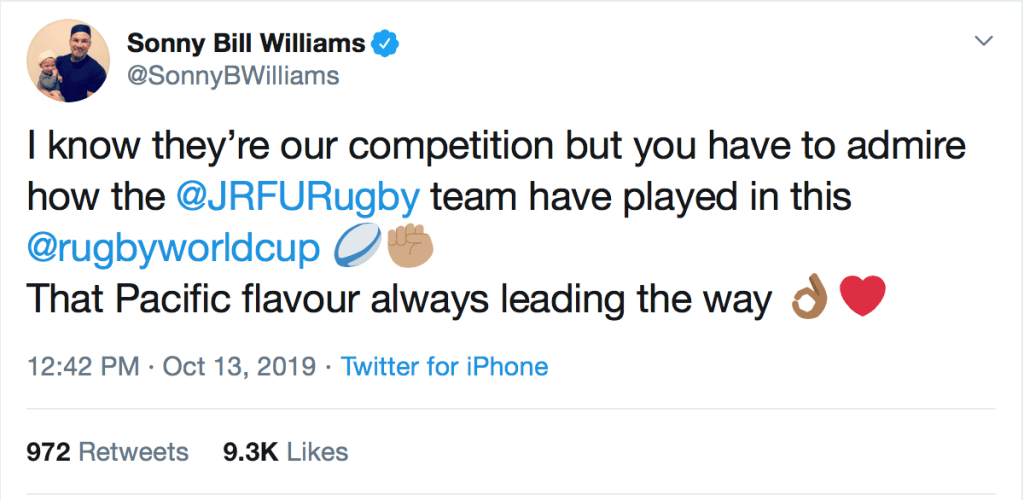
Japan have received high praise, including from All-Blacks legend Sonny Bill Williams
The time has come for World Rugby to support Japan in their jump to the next stage.
Geographically, despite Japan’s Northern Hemisphere location, it would make a lot more sense to enter into The Rugby Championship, alongside New Zealand, South Africa, Australia and Argentina.
World Rugby’s definition of a ‘Tier 1’ Nation is any team that plays in The 6 Nations or Rugby Championship. It is evident that Japan have surpassed the level played by Italy, can compete successfully with Scotland and Ireland, and have made it further than Argentina in this World Cup.
To put it simply, following this World Cup, World Rugby must ensure that Japan becomes a ‘Tier 1’ Nation within the next 12 months. If rugby is to take advantage of the Asian market, and support Japan’s stellar rise, they must play against the best on a consistent basis. Included in this must be the reintroduction of the Tokyo-based Sun-wolves franchise team to Super Rugby. Failing this, investment and media must be thrown at the domestic teams and leagues.
Sunday’s quarter final against South Africa will bring with it an opportunity to further inspire a nation. While it will be a momentous challenge to repeat the ecstasy of 2015, one thing is for sure: Japan will not go down without a fight. Looking past Sunday and indeed the remainder of this historic tournament, Japan has entered a hugely exciting new phase in its rugby development, not only for the benefit of Asia, but also for the rugby world.
And so we ask: Is it time to let Japan sit at the top table of World Rugby?
The answer, is a resounding yes.
 Views From The Sticks